Rules Engine
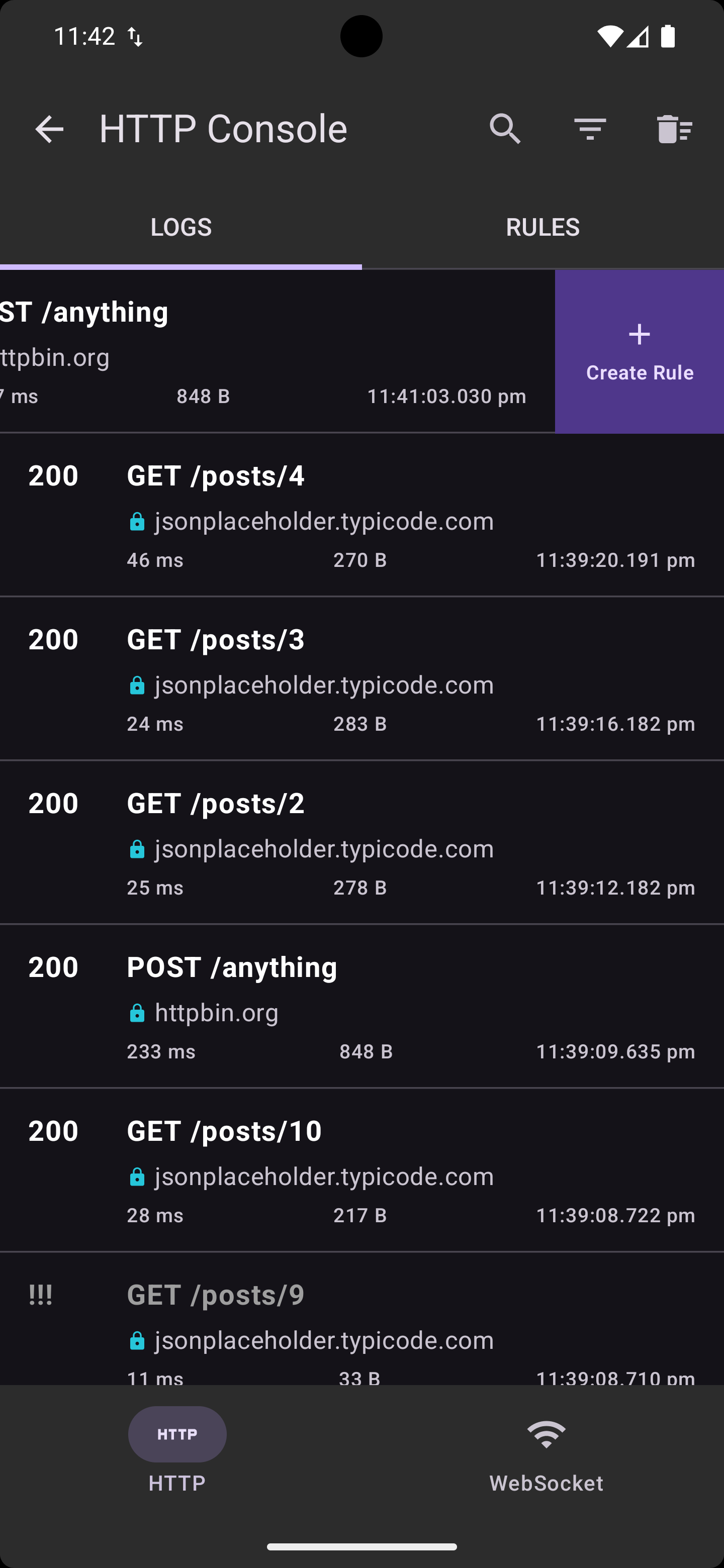
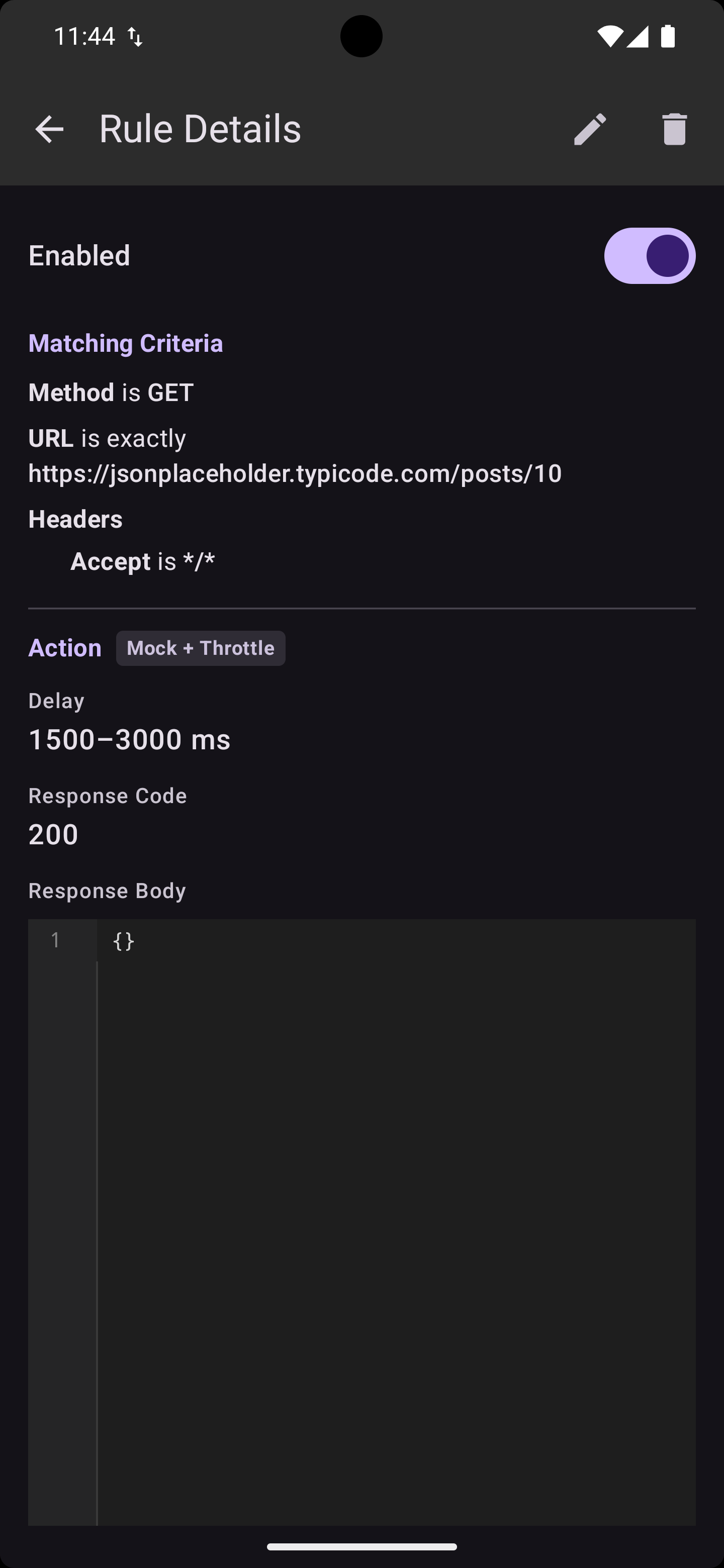
WiretapKMP includes a rules engine that can mock responses or throttle requests based on configurable matching criteria. Rules are stored in SQLite and can be managed via the built-in UI or programmatically.
Rule Anatomy
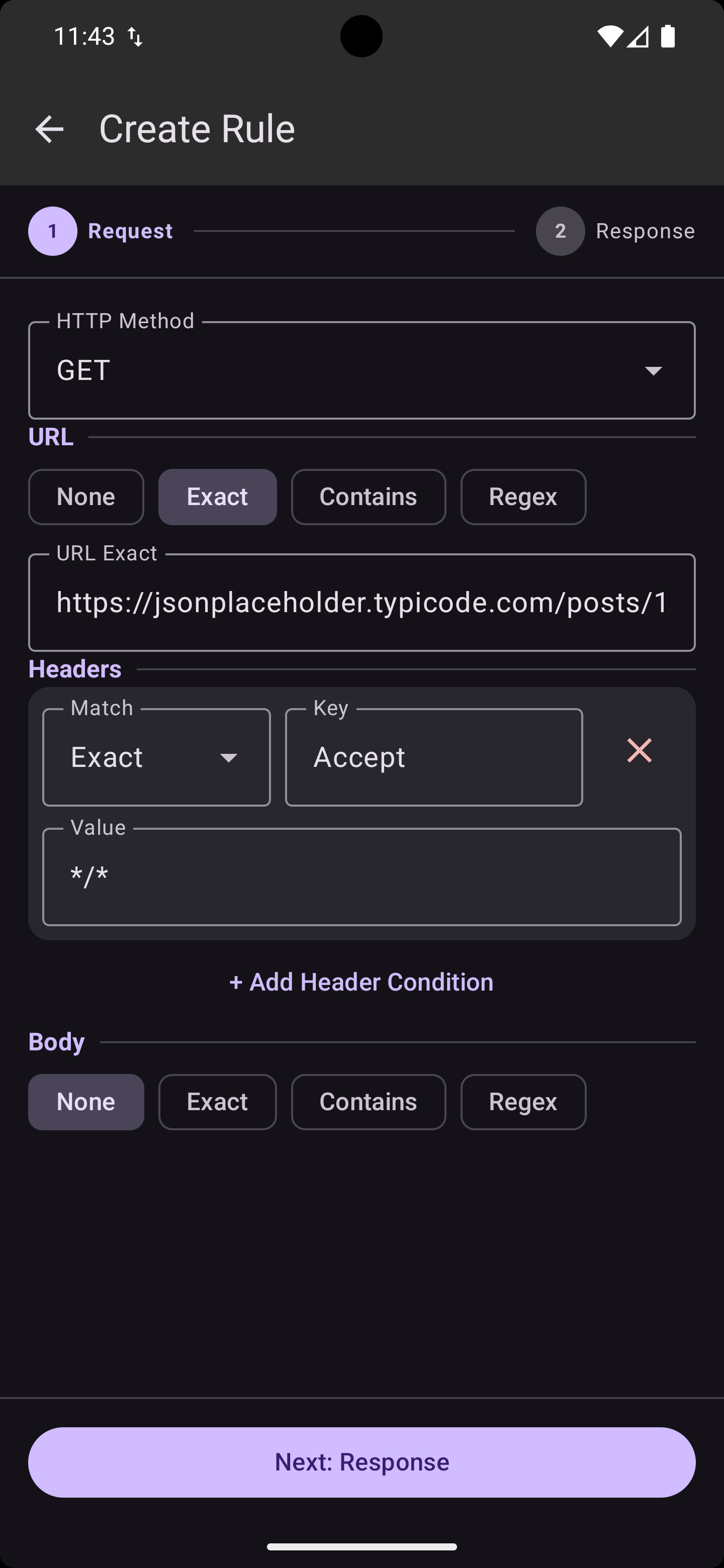
A WiretapRule consists of:
- Method — HTTP method to match, or
"*"for all methods - URL Matcher — Pattern to match against the request URL
- Header Matchers — Conditions on request headers (all must match)
- Body Matcher — Pattern to match against the request body
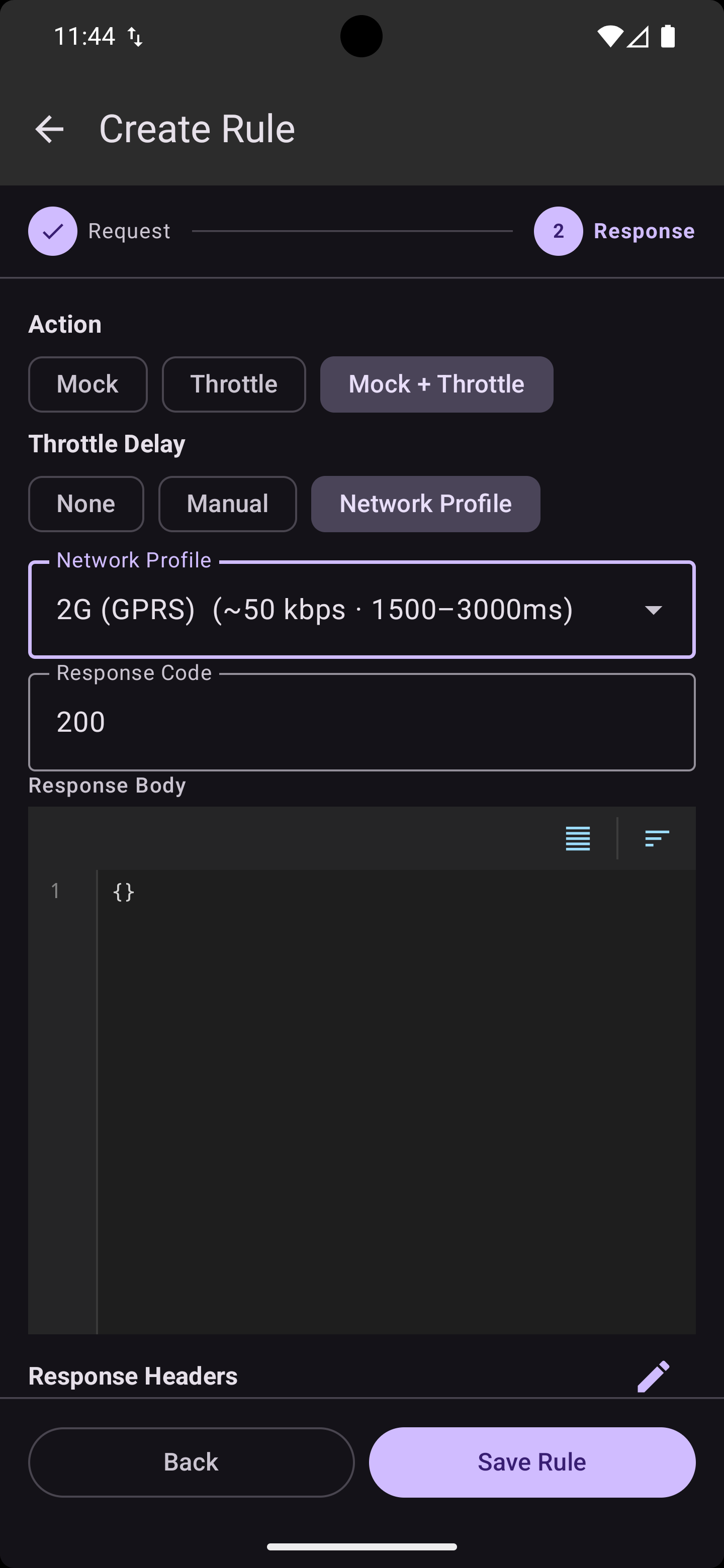
- Action — What to do when the rule matches (Mock or Throttle)
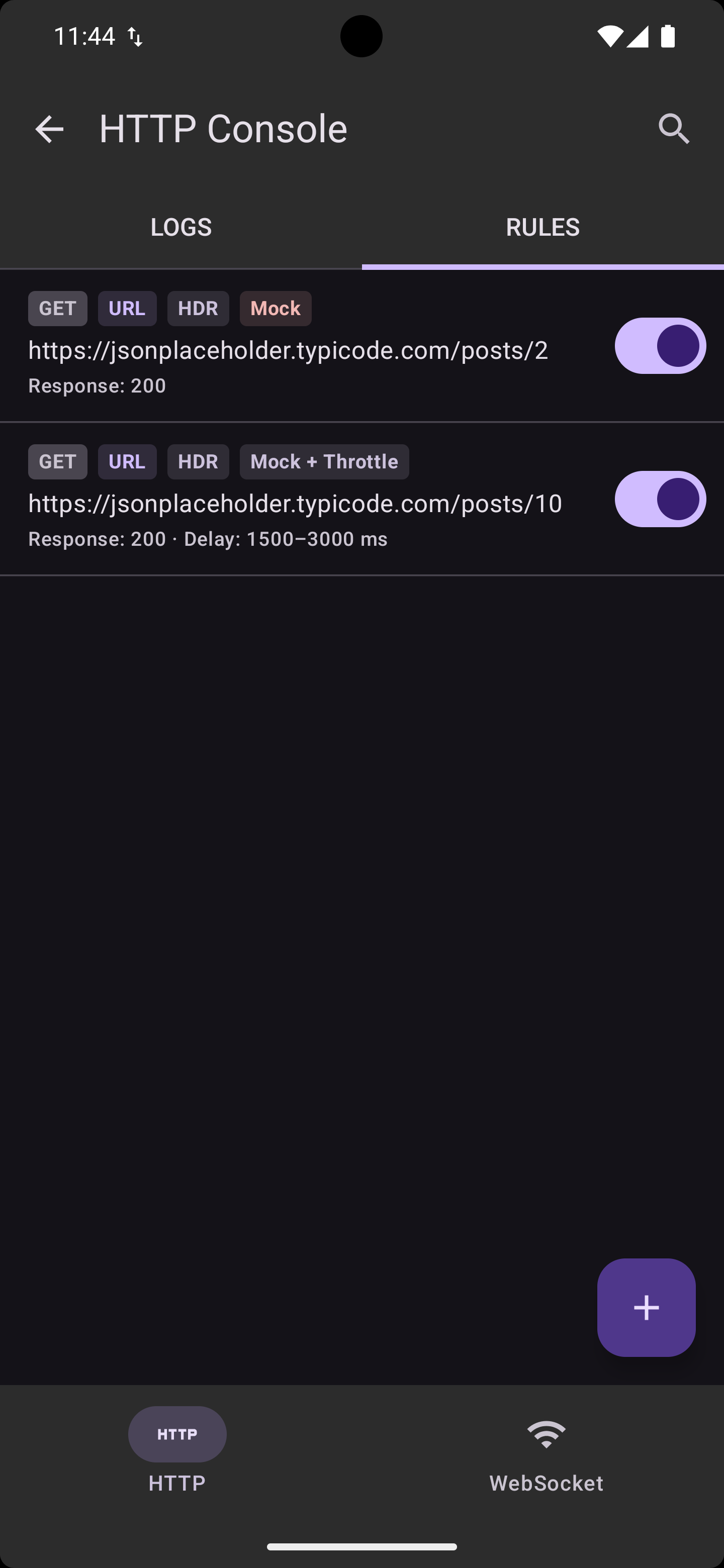
- Enabled — Toggle without deleting
All criteria use AND logic — method AND URL AND headers AND body must all match. The first enabled matching rule wins.
URL Matching
UrlMatcher.Exact("https://api.example.com/users")    // Case-insensitive exact
UrlMatcher.Contains("/api/users")                      // Substring match
UrlMatcher.Regex("https://api\\.example\\.com/users/\\d+")  // Regex
Header Matching
HeaderMatcher.KeyExists("Authorization")               // Header exists (any value)
HeaderMatcher.ValueExact("Content-Type", "application/json")  // Exact value
HeaderMatcher.ValueContains("Accept", "json")          // Value contains substring
HeaderMatcher.ValueRegex("User-Agent", ".*Android.*")  // Value matches regex
Multiple header matchers use AND logic — all must match.
Body Matching
BodyMatcher.Exact("""{"action": "delete"}""")
BodyMatcher.Contains("delete")
BodyMatcher.Regex(""""action":\s*"delete"""")
Mock Rules
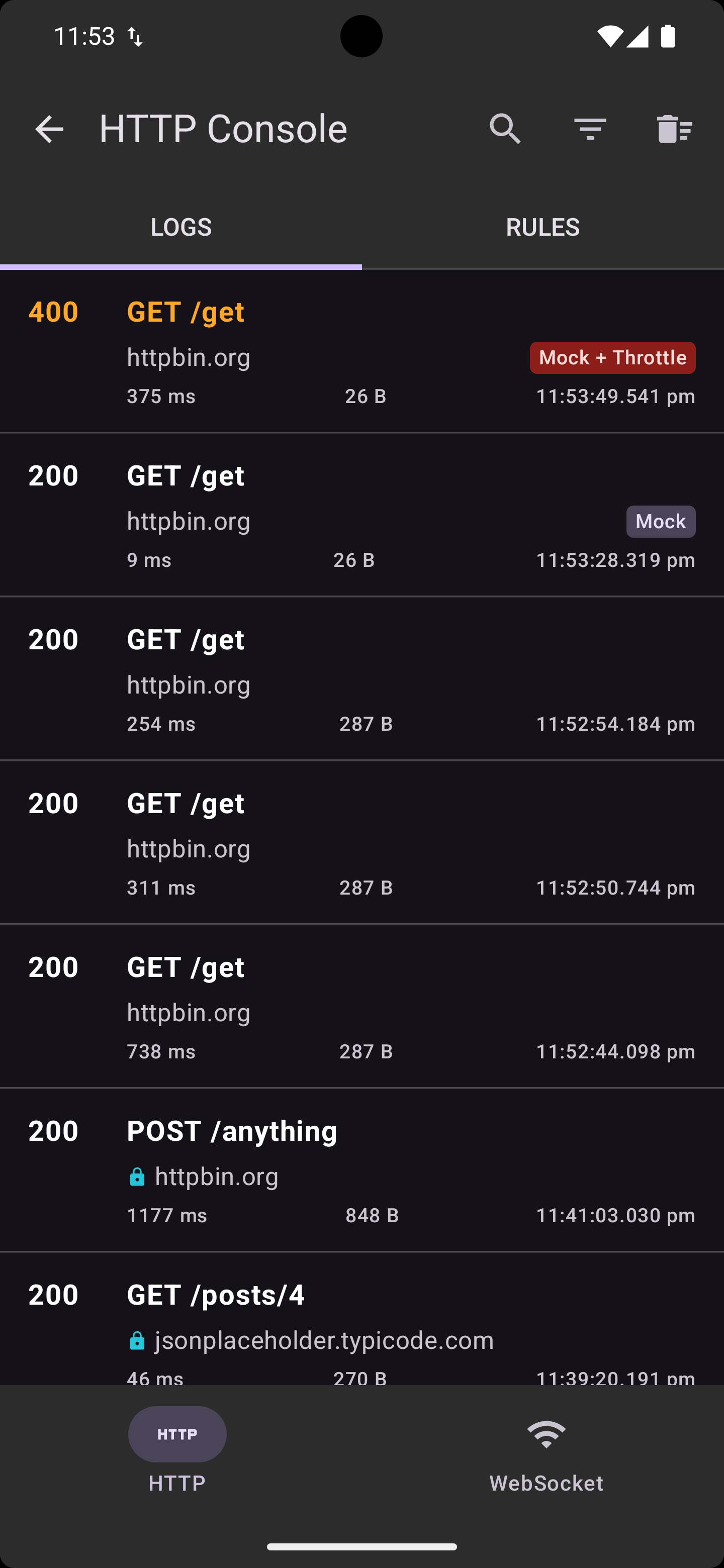
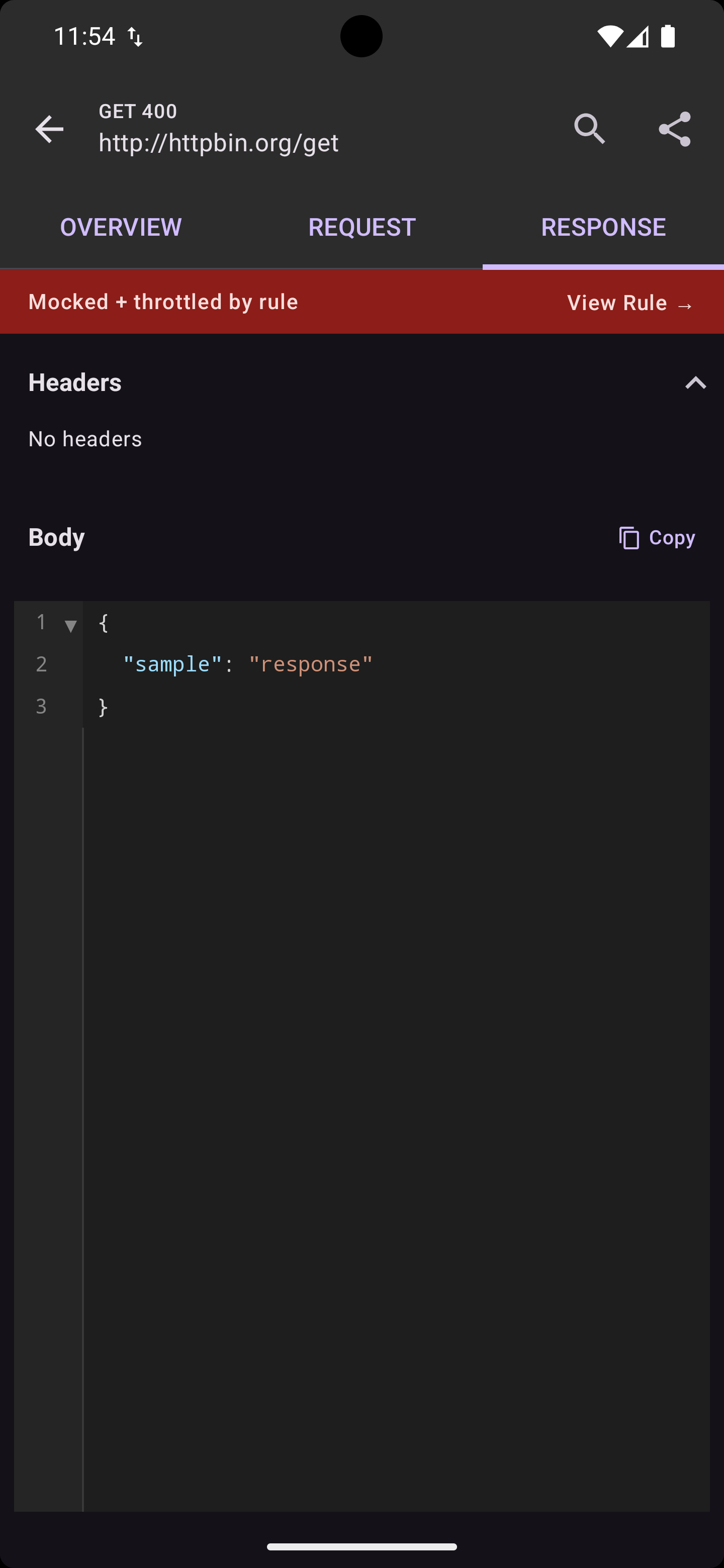
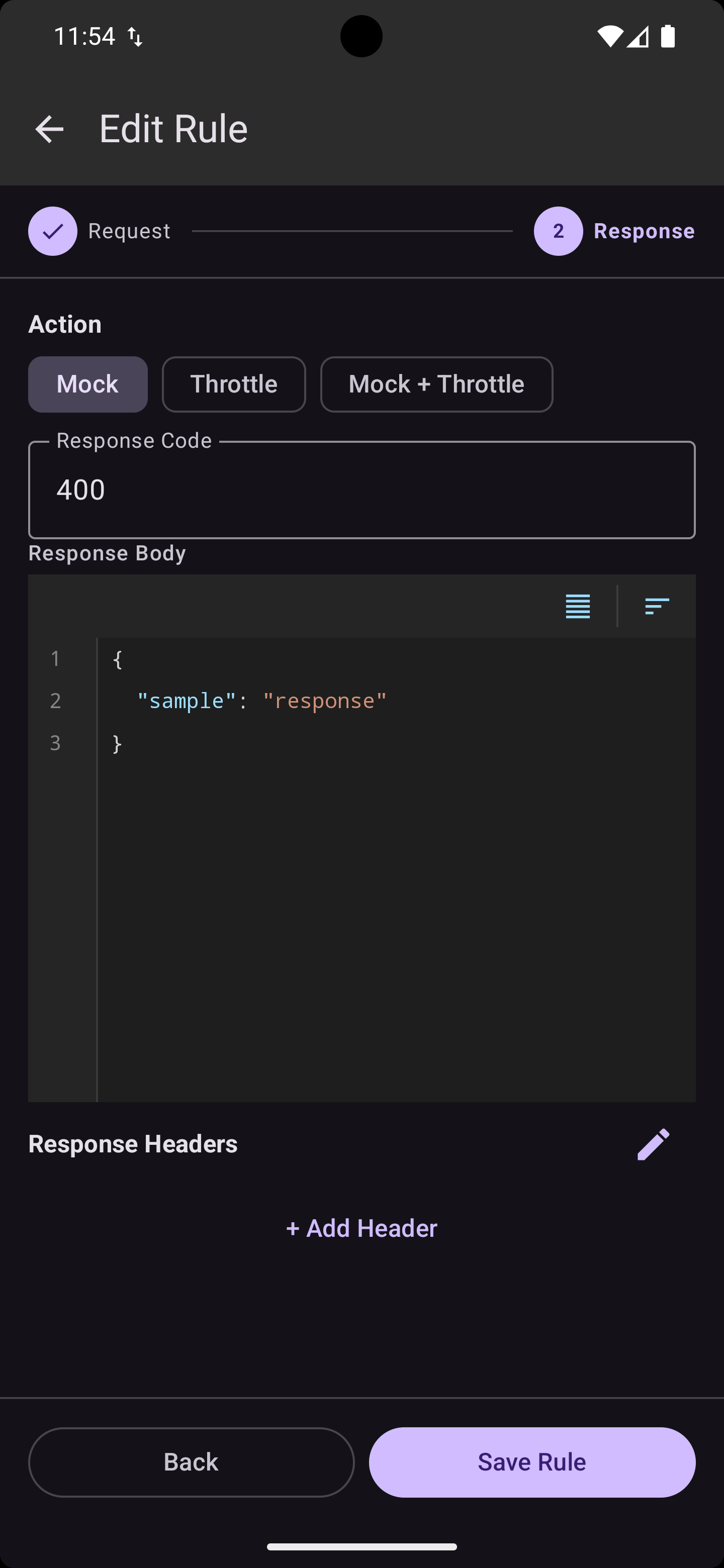
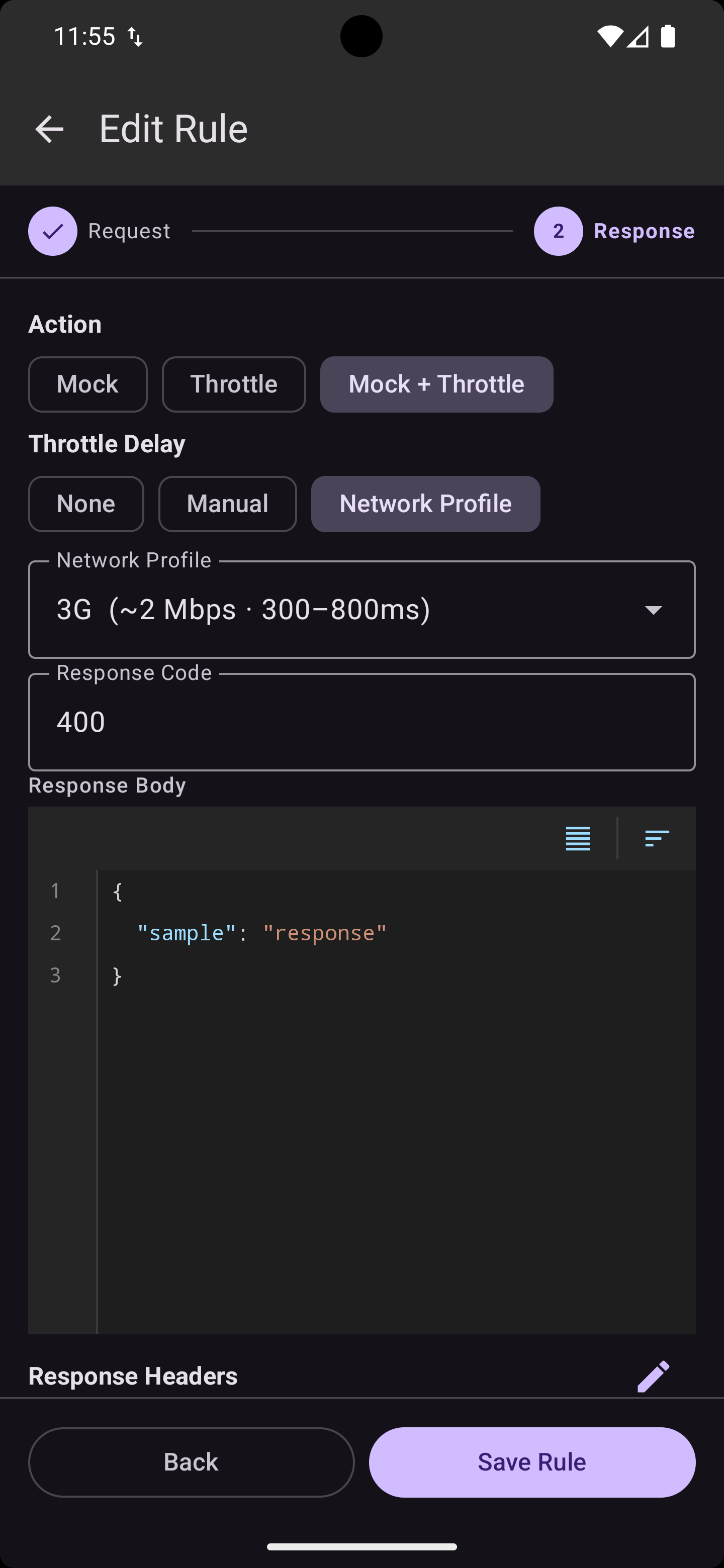
Return a fake response without hitting the network. Mock responses bypass the network entirely and appear in the inspector with a Mock badge. Supports custom response codes for error simulation (400, 404, 500, etc.).
Throttle Rules
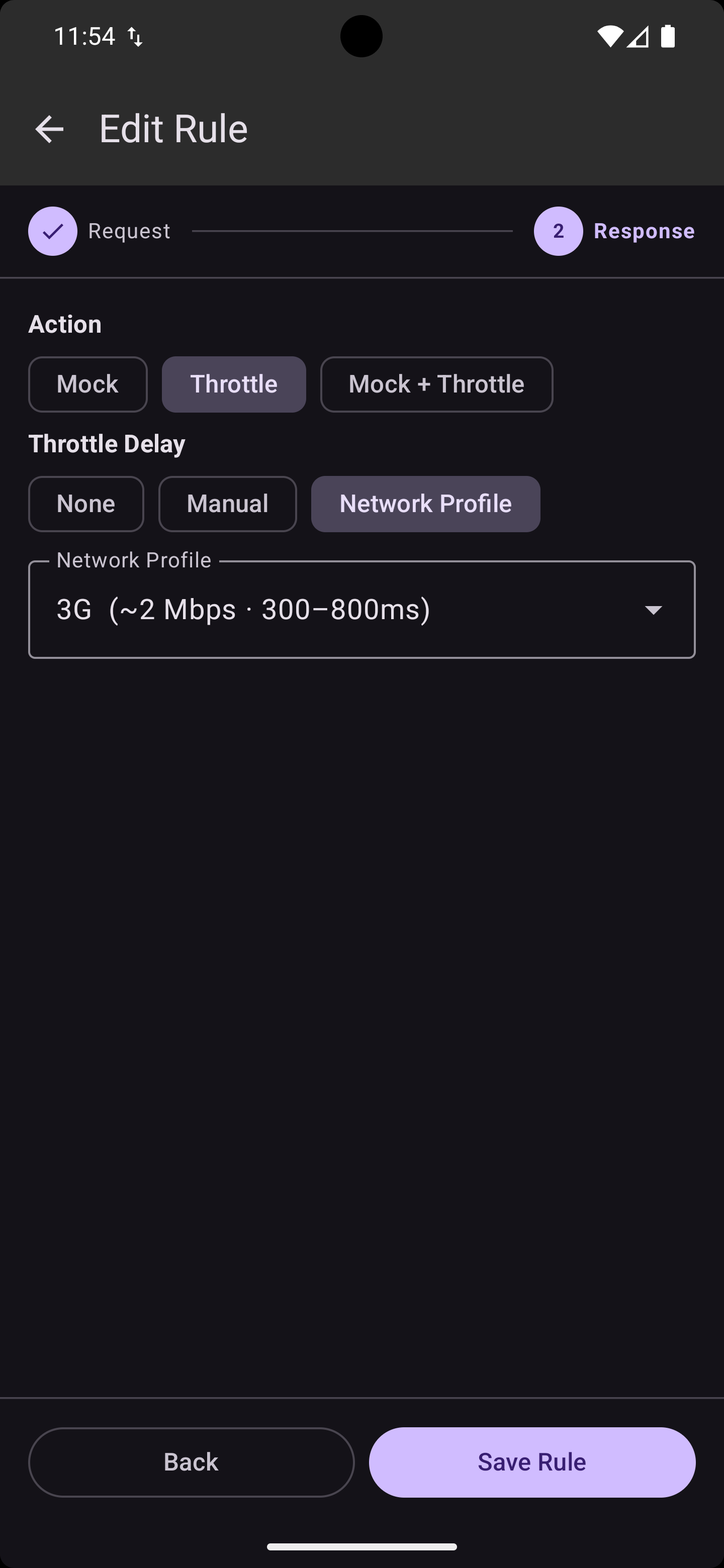
Delay requests before they reach the network. Supports fixed delay, manual range, or network profile presets (2G, 3G, etc.).
Note
Throttle rules still make the real network call — they just add delay.
Managing Rules Programmatically
val ruleRepository = WiretapDi.ruleRepository

ruleRepository.addRule(rule)                        // Add
ruleRepository.getAll()                             // Flow<List<WiretapRule>>
ruleRepository.setEnabled(ruleId, enabled = false)  // Toggle
ruleRepository.deleteById(ruleId)                   // Delete
ruleRepository.deleteAll()                          // Clear all
Built-in UI
The Wiretap inspector includes a Rules tab where you can create, edit, enable/disable, and delete rules with a multi-step form — including conflict detection for overlapping rules.